
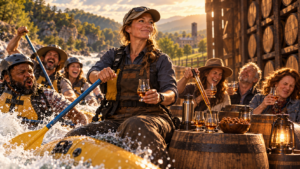
Most people think a great guide is the one who knows the most.
I don’t.
One of the best
guides I have ever watched was on a river.
Before we ever pushed off from the bank, he explained his job. He told us how well he knew the river, how he read the water, how he moved with the boat, and how important it was that when he said paddle, we paddled.
Our group was a little uneasy.
He noticed.
When we reached the rapids, he did not push us straight into the roughest line just because he could. He used his paddle, told us how to work together, and guided us around the hardest part.
We still had the thrill.
We just didn’t have the heart attack.
That stayed with me.
Because a great guide does not give every guest the most impressive experience they are capable of delivering.
A great guide
gives that particular guest the experience they are ready to enjoy.
That lesson changed the way I think about guiding Kentucky.
A river guide reads the water.
A great
Kentucky guide reads the people.
That means paying attention long before anyone says they need something.
Most guests are polite.
They are probably not going to tell you, “I’m bored,” or “I’m hungry,” or “I don’t care about this stop as much as we thought I would.”
So we watch.
Are they asking a lot of questions?
Are they
lingering longer than expected?
Did they sit down instead of heading toward the shop?
Are they still talking about what they just tasted twenty minutes later?
Those are signals.
The itinerary may tell you where the group is supposed to be.
The guests tell you whether it is time to leave.
That river guide understood our comfort level.
He did not remove the adventure.
He calibrate
d it.
That is exactly how I think about bourbon days.
A guest may arrive saying they want all of the famous names.
That is what they know.
Sometimes my job is to gently steer them toward a smaller distillery where we can slow down, actually taste, and learn what their palate is doing.
Do they lik
e the spice of a higher-rye bourbon?
Do they respond more to a wheated profile?
Do they like oak, sweetness, proof, fruit, heat?
Once we understand that, we know which direction to paddle next.
The guide is not taking control away from the guest.
The guide is
helping the
m make a better choice.
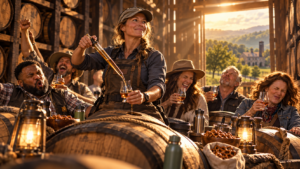
I once had a bourbon club come to Kentucky after already visiting five times.
These were not beginners.
They knew the big names.
They knew the Trail.
They had already done a lot.
And I showed them experiences they had never had before, including access to a private club our company belongs to and a back road experience that completely changed the day.
Now when they come back for four days, they spend one of those days with me.
That means a lot.
Because it proves something important.
A great guide is not only for the person who knows nothing.
Sometimes the person who has already been five times gets the most value because they finally get shown a different line through the river.
You should not have to fill out a survey in the middle of your day.
The check-ins should feel natural.
“Are you guys getting hungry?”
“Ready to head to the next stop?”
“How was the bottle dipping tour?”
“Any more shopping?”
“Did you get the bottles you came for?”
Those are casual questions.
But they tell us everything we need to know.
Energy.
Interest.
Pace.
Whether the group wants to linger.
Whether they are ready for lunch.
Whether the next stop still makes sense.
A great guide is collecting feedback all day without making the guest feel like they are being evaluated.
One of the greatest gifts a guide can offer is simply paying attention.
What did you sip?
What did you stop and think about?
What did you ask for another taste of?
What made you smile before you even said anything?
What did you leave sitting in the glass?
Those little reactions tell us a lot.
By the middle of the day, a good guide may already understand your palate better than they did when you first got in the vehicle.
That means the recommendations can get better as the day goes on.
Maybe we notice you keep going back to higher-rye bourbons.
Maybe you light up every time something softer and wheated appears.
Maybe you thought you wanted big proof, but you keep responding to balance instead.
That information matters.
It helps us make better recommendations at the next stop.
It helps us suggest what you might want to buy.
And by the end of the day, it helps us point you toward something that feels personal instead of generic.
A guide should not just remember where you have been.
They should remember what you loved.
You can spot the difference quickly.
A bad guide opens the bus door, points toward the entrance, and says:
“Call me when you’re done.”
Then the guests are handed off to the distillery guide.
At the next stop, they are handed off again.
And again.
The day becomes a series of disconnected experiences with nobody carrying the thread between them.
That is transportation.
It is not guiding.
A great guide stays connected to the experience even when someone else is leading the distillery tour.
They know what the group is walking into.
They know what the guests just learned.
They know what somebody loved at the last tasting.
They hear the questions being asked and understand how the next experience can build on them.
The distillery guide may guide the tour.
But your guide is guiding the day.
That distinction matters.
The worst guides are more interested in completing the itinerary than understanding the people on it.
They hit the stops.
They make the handoffs.
They keep the schedule.
They miss the day.
Sometimes the most important thing a guide can do is nothing.
If guests are asking questions, sitting down, getting comfortable, and clearly connecting with the place, do not rush them because the itinerary says it is time to move.
That moment may be the reason they remember the trip.
The skill is knowing when the schedule is protecting the experience and when it is getting in the way of it.
That is judgment.
You cannot automate that.
Some groups want stories all day.
Some want long stretches of conversation among themselves.
Some want bourbon education.
Some want history.
Some want the perfect photo.
Some want to laugh.
A guide should add meaning without filling every silence.
Sometimes the best thing you can do is point something out and then stop talking.
Let the group look.
Let them taste.
Let them laugh.
Let them have their own moment.
A great guide is not trying to be the center of the day.
That river guide made one thing very clear before we launched.
He could read the river.
He could steer the boat.
But when he said paddle, we needed to paddle.
That matters.
A guide can create the conditions for a great experience, but the guest still has to participate.
Taste the bourbon.
Ask the question.
Try the thing you did not expect to like.
Tell us when something surprises you.
Stay curious.
The best days are collaborative.
The guide knows the river.
The guests still have to paddle.
A list can tell you where the distilleries are.
A guide knows which stop fits the group.
A list can tell you the fastest route.
A guide knows when the back road is the better one.
A website can show you a famous name.
A guide may know the smaller place that will teach you more.
That is where experience becomes valuable.
Not just knowing what exists.
Knowing what belongs together.
The best river guides make safety feel almost invisible.
They have the life jackets.
They know the water.
They have the plan nobody wants to need.
But they are not making the entire day about what could go wrong.
That is true in Kentucky too.
And there is one comparison I cannot resist:
White water rafting and high-proof bourbon have something in common: both can take your breath away if you’re not paying attention.
A great guide knows when you have been drinking higher-proof bourbon and quietly makes sure a bottle of water is close by.
They know when lunch needs to happen.
They know when the group needs a slower pace.
They know the back roads.
They know when someone has had enough without making a production out of it.
That is what I mean by quiet confidence.
The best safety is the kind that lets the guest stop thinking about logistics and start enjoying the experience.
A great river guide plans the takeout.
The trip does not just end somewhere downstream.
The ending is part of the experience.
I think Kentucky days work the same way.
The last stop matters.
The ride home matters.
How people feel when they get out of the vehicle matters.
Sometimes the whole group is singing along to the playlist.
Sometimes everybody is still talking about their favorite pour.
Sometimes somebody has their shades on, head against the window, taking a well-earned nap.
Those are all good endings.
Because a great day does not have to end with one more activity.
Sometimes the best ending is simply knowing everybody had enough of the right things.
At the end of a great day, I do not hope somebody says:
“Our guide knew a lot.”
That is expected.
The compliments that matter are different.
“We made a new friend.”
“You made the trip.”
“You’re part of our group now.”
That is what great guiding looks like to me.
Knowledge matters.
Planning matters.
Timing matters.
Judgment matters.
But all of that is in service of something more human.
Connection.
The best guide knows the route well enough that you do not have to think about it.
They read the group closely enough to know when to adjust.
They give you the thrill without the heart attack.
And by the end of the day, they no longer feel like someone you hired.
They feel like someone who was part of the trip.
A great guide reads the people as carefully as the route. They prepare the group, adjust the pace, notice what is landing, and know when to stay with the plan and when to change course.
A driver gets you from one place to another.
A guide carries the thread of the entire day.
Even when a distillery guide, bartender, host, or other expert takes over for part of the experience, your guide stays connected to what the group is learning, liking, and needing next.
Local knowledge is not just knowing facts.
It is knowing which experiences belong together, which road to take, when to slow down, and when a less obvious choice will be better for the group.
Absolutely.
Some of our most experienced guests have already visited Kentucky multiple times. The value comes from access, relationships, pacing, back roads, and experiences they may not know exist.
By paying attention.
What guests sip, what they stop over, what they ask questions about, what they request another taste of, and what they leave behind all give the guide clues about their palate.
Those observations can shape recommendations throughout the day and make the final suggestions much more personal.
We watch and we check in.
Guests asking more questions, lingering, sitting down, shopping less, or talking about a stop long after leaving it can all signal that something is connecting.
And because most guests are too polite to announce that something is not working, we check in throughout the day instead of waiting until the end to ask.
At Louisville Guest Services, we believe the best guided days are personal, not packaged.
We handle planning, transportation, timing, dining, and concierge support. Sipping in the South brings the bourbon culture and education that gives the experience depth.
But the most important part is still the people in the vehicle.
Tell us who is coming.
Tell us what they love.
Tell us what kind of day they want to have.
Then let us read the river.
Take the Back Roads. Experience Kentucky Well.