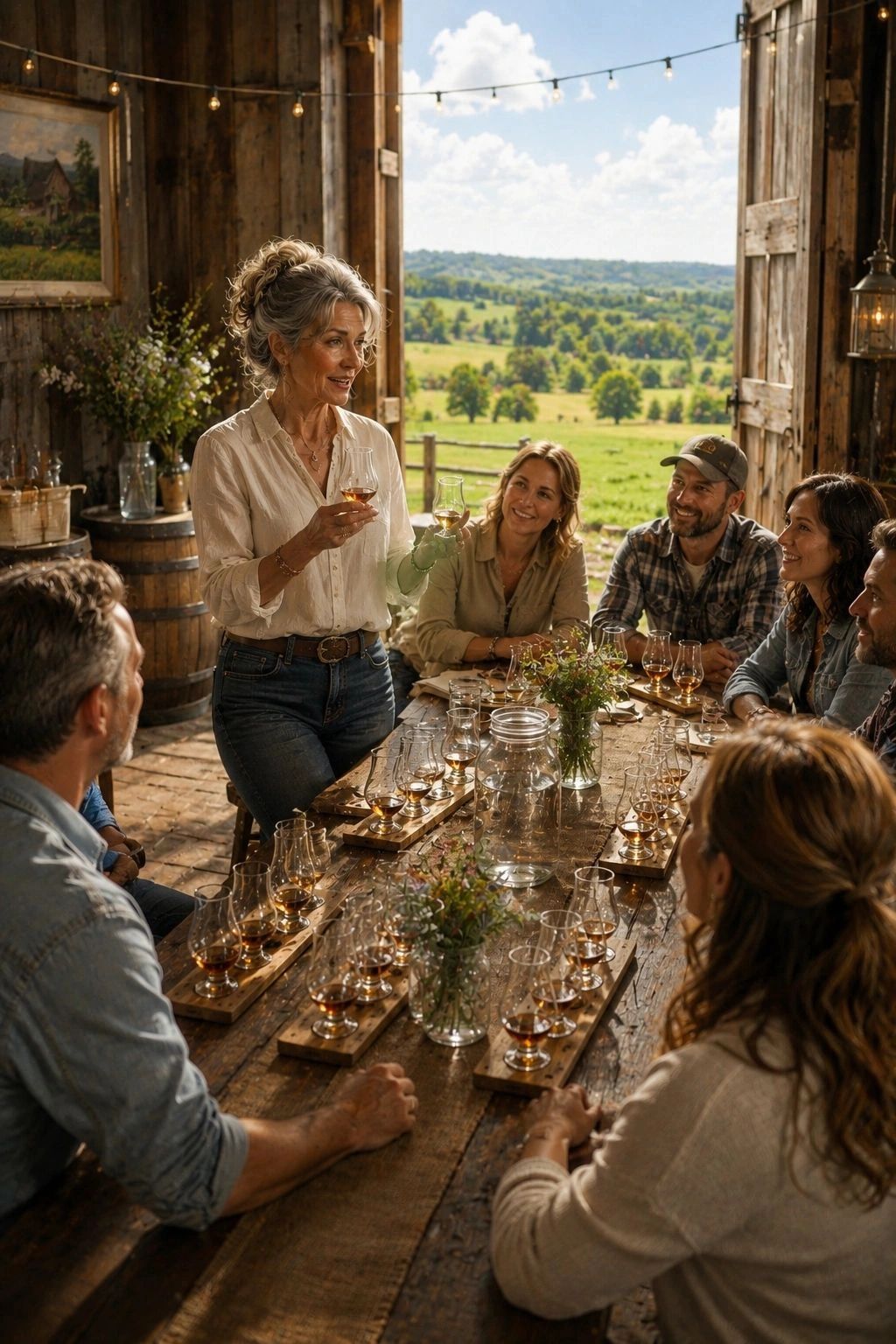
There’s a moment on almost every bourbon tour when someone looks at me and asks:
“How do you actually taste this stuff?”
Not in a rude way.
In a genuine way.
Because let’s be honest. Bourbon can be intimidating. There’s a language around it. A ritual. And for people who are new to it, that first sip can feel like you’re supposed to know something you don’t.
So let me walk you through exactly how to taste bourbon.
Not the way a textbook tells you.
The way I teach it on tours.
## The Angelique Method™
A Guided Journey Through Nosing and Sipping Bourbon
Bourbon is not meant to be rushed. It’s meant to be understood.
This method is built on sensory acclimation, a step-by-step process that allows your palate and your senses to adjust to the alcohol so you can experience flavor instead of just heat.
We begin with the nose, because flavor starts there.
But first, what you pour it in matters.
If you’re serious about tasting, reach for a Glencairn glass. It looks like a small whiskey tulip, and its shape is designed to do one thing: concentrate the aromas lo toward your nose so you can actually smell what’s happening in the glass.
If you don’t have one, a small wine glass works surprisingly well.
A rocks glass works too, but the aromas escape faster. It’s like listening to music with the speakers facing away from you.
The liquid itself should be at room temperature. Ice dulls flavor. If you want to add ice later, that’s fine. But for the tasting itself, don’t let the cold steal the show.

## Part One: The Nose
### Step One: The First Approach
Bring your glass up so it gently rests near your upper lip, just beneath your nose. Keep your mouth slightly open as you inhale.
Take a slow, gentle smell for no more than 8 to 10 seconds.
Keeping your mouth open allows the alcohol vapors to escape, preventing that sharp burn and allowing softer aromas to come forward. You may notice sweetness, vanilla, spice, fruit, or floral notes. Or you may not notice anything yet.
This is your introduction.
### Step Two: The Nasal Cycle
If the aroma isn’t immediately clear, gently move the glass from one nostril to the other, taking a soft inhale on each side.
Your body naturally shifts airflow between nostrils throughout the day. This is known as the nasal cycle, and it means one side is often more open or more sensitive than the other.
As you move side to side, you may discover that one nostril picks up aroma more clearly. That becomes your guide.
Stay with it briefly, no more than 8 to 10 seconds per side.
### Step Three: Let the Brain Lead
Roughly 70 to 80 percent of what we experience as taste comes from smell.
If your brain does not recognize the aroma, it will be much harder to identify those same notes when you sip. By nosing first, you are giving your brain a reference point.
You are preparing for flavor.
## Part Two: The Sip
Sensory Acclimation in Action
Now we move from the nose to the glass. Before we take a full sip, let’s take a moment to look at what we’re about to drink.
Hold your glass up to the light.
What do you see?
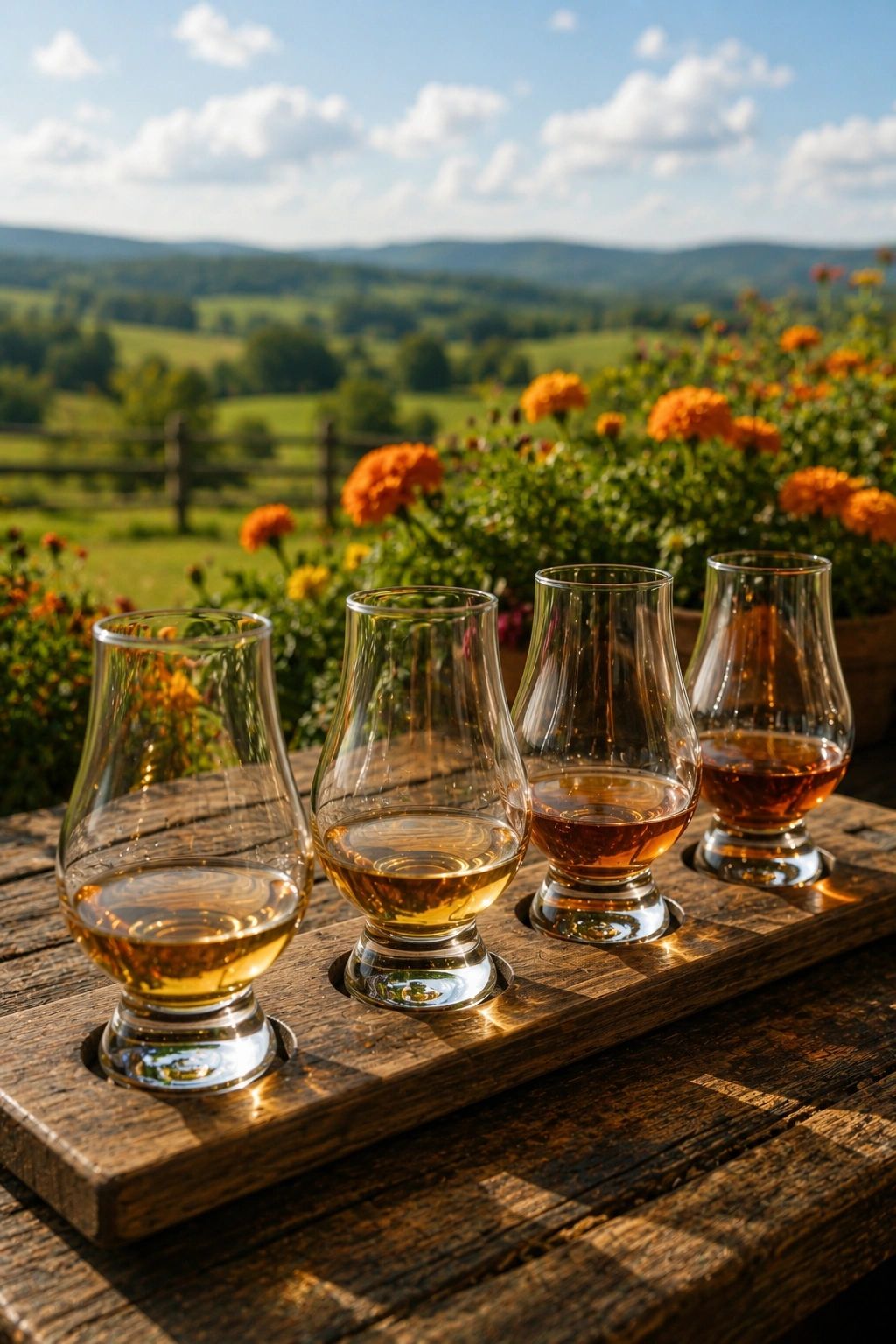
Color tells a story. A light, pale bourbon has likely spent less time in the barrel. A deep, dark amber has been sitting in that oak longer, pulling more color and flavor from the wood.
Swirl it gently. Watch the liquid coat the glass. Those slow streaks crawling back down the sides are called legs. Thicker legs often mean higher proof or more sugar content from the barrel.
It’s not complicated. You’re just looking.
Now, let’s taste.
### Step One: The Welcome
We don’t start by drinking. We start by introducing.
Place a small amount of bourbon onto your lips and let your tongue gently press it into the surface. This area is highly sensitive and allows your palate to register the bourbon before you ever take a sip.
Some may notice sweetness or spice. Some may not. Both are correct.
You are simply saying hello.
### Step Two: The Opening
Now we prepare the palate.
Take a sip of water and allow it to fully coat your mouth. While your palate is still hydrated, take a small sip of bourbon and let it move across your tongue.
This lowers the intensity of the alcohol, softening the heat and allowing the flavors to open up. What once felt like an 80 proof bourbon now feels much gentler.
This is where flavor begins to reveal itself.
And this is also where the Kentucky Chew comes in — move the bourbon around your whole mouth. Across your tongue, your cheeks, the roof of your mouth. Let it hit every taste bud you have.
Sweetness hits the front of the tongue.
Spice lands on the sides.
Bitterness lingers in the back.
### Step Three: The Experience
Now take a small, natural sip the way you normally would.
At this point, your senses are acclimated. The heat should feel more balanced, and the flavors more defined and layered.
This is the bourbon as it was meant to be experienced.
Then swallow. And pay attention to what happens next. That’s the finish. Does it fade quickly? Does it linger? Does it leave warmth in your chest?
Some people call that warmth the Kentucky Hug.
It’s one of my favorite parts.
### The Insider Technique (Optional)
For those who are a bit more daring, there is one final step.
Place a very small amount of bourbon under your tongue and hold it there briefly before swallowing.
This area is extremely sensitive and can intensify both sweetness and heat. For some, it unlocks flavors more quickly and more vividly.
It is not necessary, but it is memorable.
—
## Building a Flight
If you’re tasting multiple bourbons, the order matters.
Always start with:
Lower proof before higher proof.
Lower rye before higher rye.
Younger before older.
Here’s why.
A high-proof bourbon will numb your palate and make a lower-proof bourbon taste thin. A spicy high-rye bourbon will drown out the soft, sweet notes of a wheated bourbon. And an old, oaky bourbon will completely overwhelm a younger, more delicate one.
Work your way up the ladder.
You’ll enjoy every stop along the way.
—
## One Drop Changes Everything
This is a trick a lot of people don’t know.
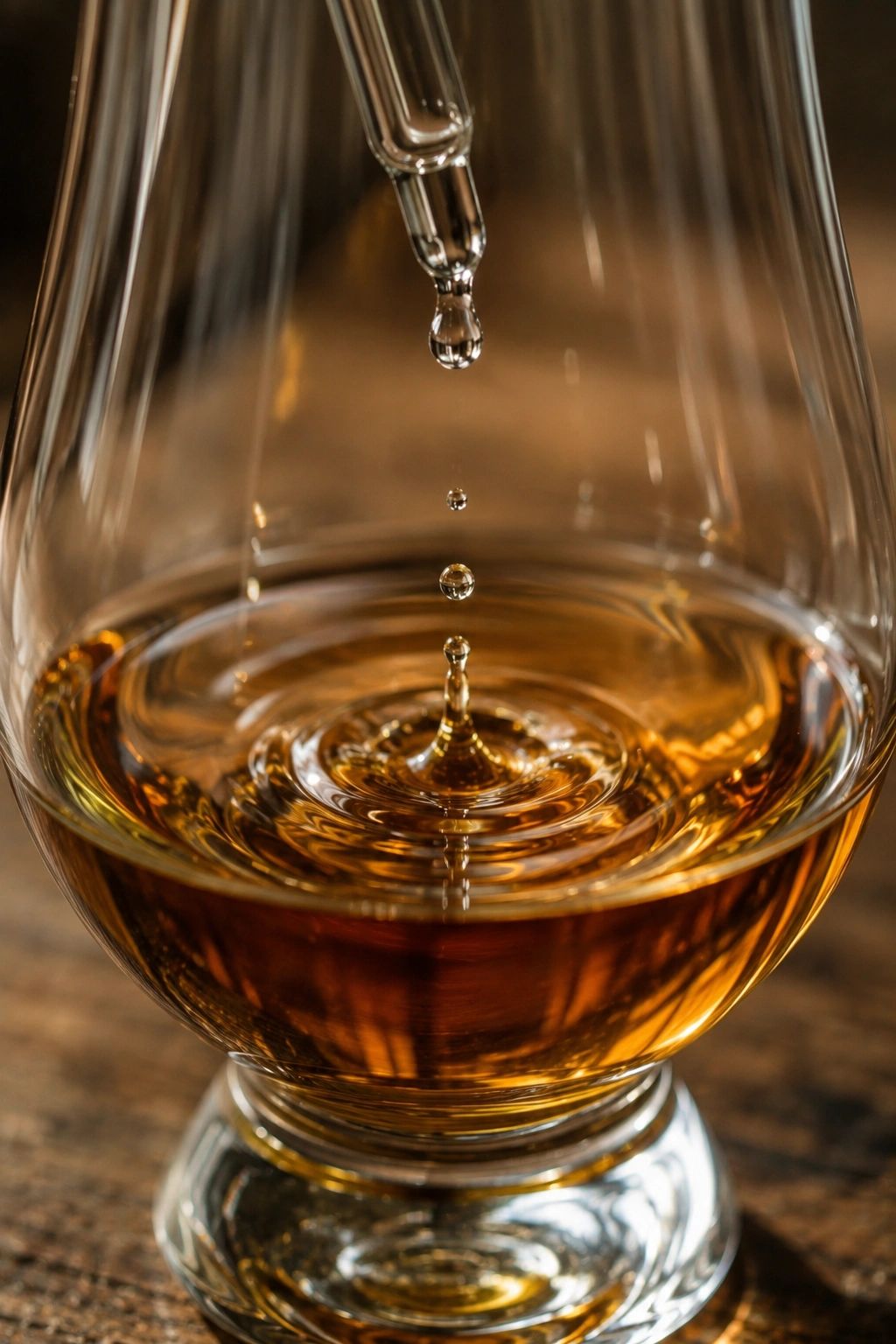
Add a single drop of water to your glass. Room temperature water. Filtered if you have it.
That one drop breaks the surface tension and releases aromatic compounds that were trapped under the alcohol.
A bourbon that tasted hot or closed off suddenly opens up.
New flavors appear.
That’s not magic.
That’s chemistry.
—
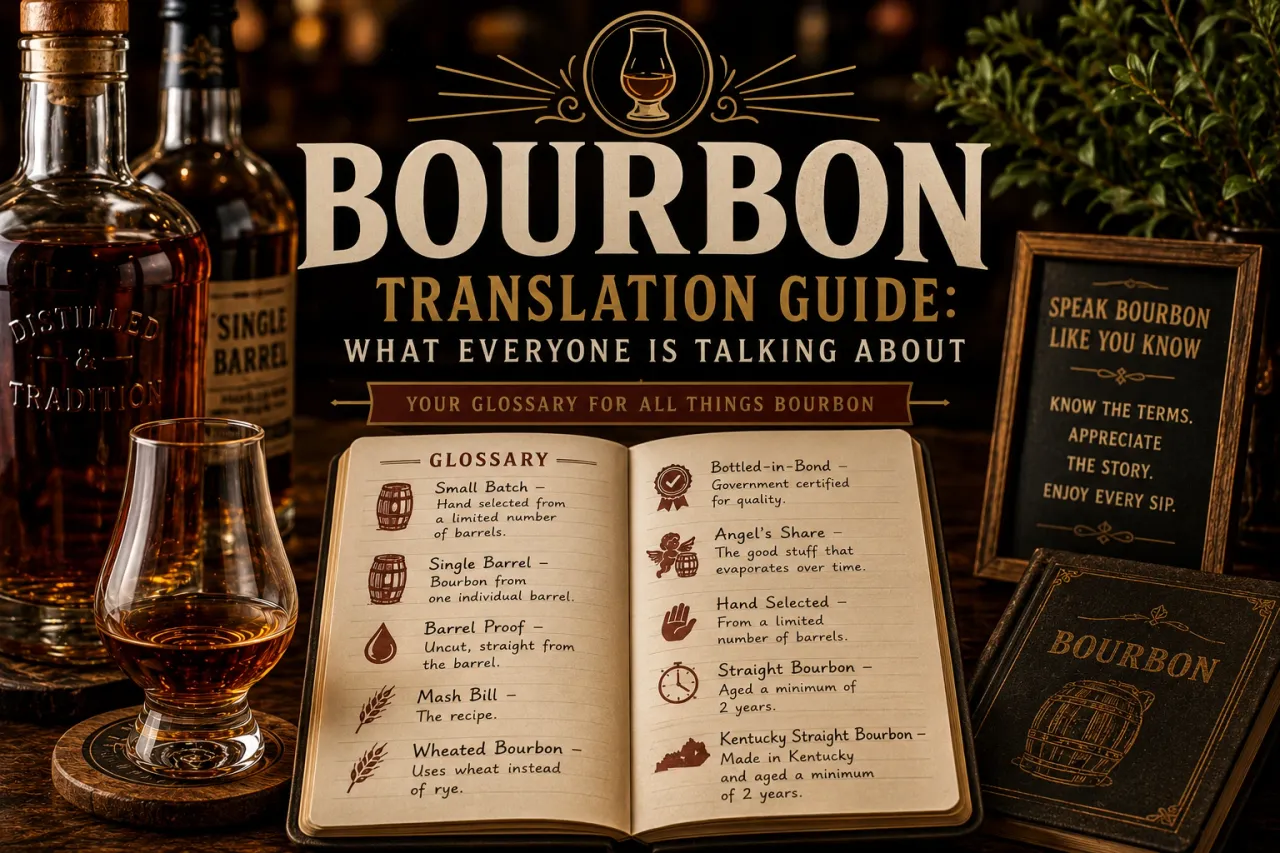
## A Few Terms That Help
As you explore, you’ll hear these words. Here’s what they mean:
**Neat** – Served at room temperature, nothing added.
**Proof** – Double the alcohol percentage. 80 proof = 40% alcohol.
**Mash bill** – The grain recipe.
**Small batch** – Blended from a handful of barrels.
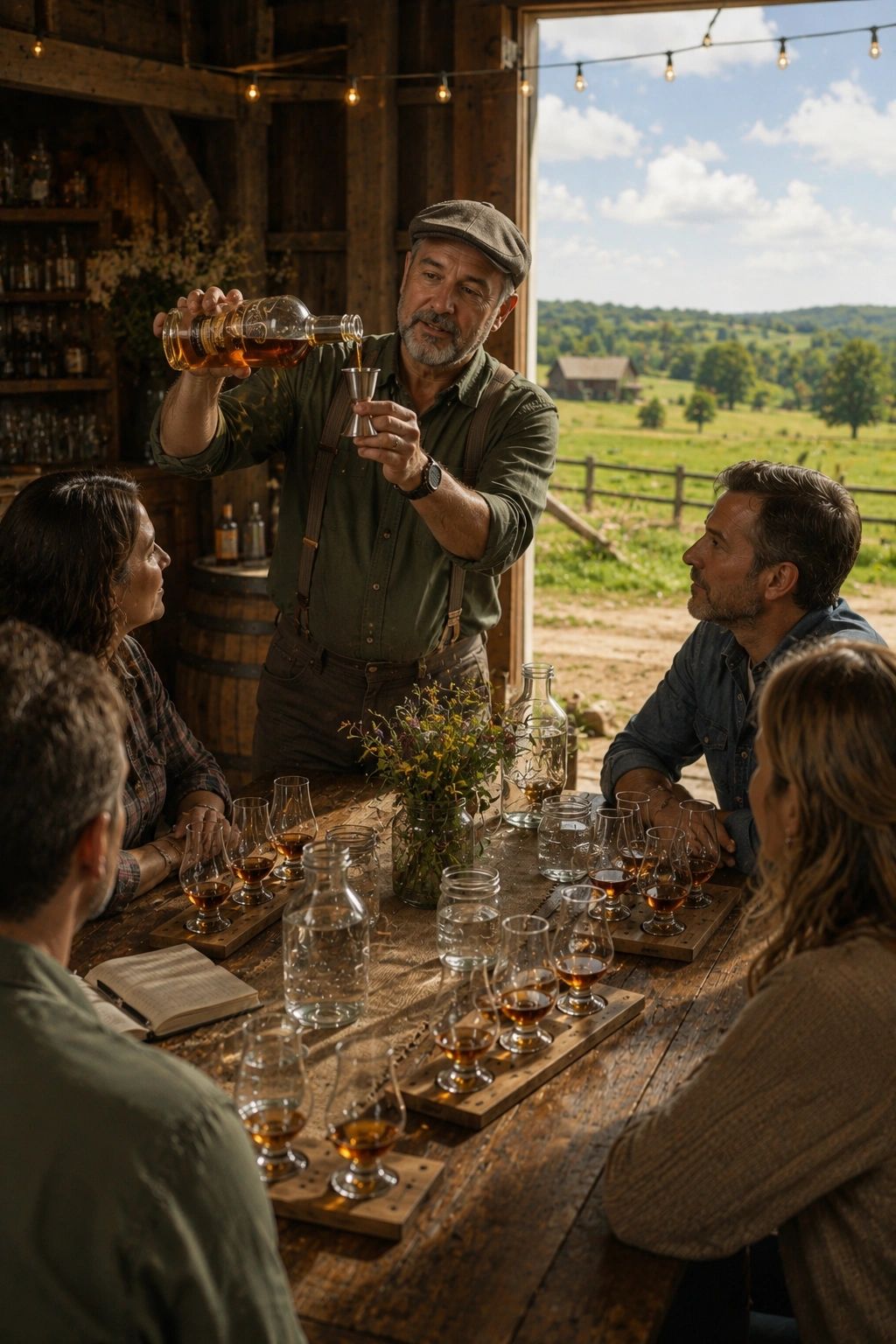
**Single barrel** – Straight from one barrel. Unique. Never exactly the same twice.
—
## The Most Important Thing
There is no wrong way to enjoy bourbon.
Some people taste vanilla. Some taste caramel. Some taste leather and tobacco and cherries.
The goal isn’t to get it right.
The goal is to notice.
To slow down.
To appreciate everything that happened before that bourbon reached your glass.
That’s what tasting is really about.
When you present it this way, you’re not just learning how to drink bourbon. You’re giving yourself a sense of control and discovery.
And perhaps most importantly, you’re quietly showing yourself that you belong in the experience.
—
**Come Taste With Us**
Reading about tasting is one thing. Doing it with an expert by your side is something else entirely.
At Sipping in the South, our Bourbon Academy 201 and 301 experiences include guided tastings, blind flights, and deep dives into what makes each bourbon unique.
Whether you’re a beginner or a collector, we have a seat for you.