One of the best parts of my job is listening to the questions people ask on bourbon tours.
Some are thoughtful.
Some are hilarious.
And some are bourbon myths that have been floating around for so long that people assume they must be true.
The funny thing is, bourbon is surrounded by stories. That’s part of what makes it interesting.
But every now and then it’s worth separating the facts from the folklore.
So let’s tackle some of the biggest myths I hear every week.
## Myth #1: Bourbon Has to Be Made in Kentucky
This one might be the reigning champion.
Someone usually asks me this before we’ve even reached our first distillery.
“If it’s made in Texas, it’s just whiskey, right?”
Nope.
Bourbon can legally be made anywhere in the United States.
Kentucky.
Texas.
Colorado.
New York.
Washington.
Even Puerto Rico.
The rules don’t say bourbon has to come from Kentucky. The rules say it has to be made in America, contain at least 51 percent corn, be aged in a new charred oak barrel, and follow the other legal requirements that define bourbon.
Now, Kentucky does produce the vast majority of the world’s bourbon.
We’ve got the history.
We’ve got the climate.
We’ve got generations of experience.
But legally speaking, Kentucky isn’t what makes bourbon bourbon.
The process does.
## Myth #2: Older Automatically Means Better
The bourbon industry loves age statements because consumers love age statements.
After all, if a 10-year bourbon is good, a 20-year bourbon must be twice as good, right?
Not necessarily.
Unlike wine, bourbon spends its life in brand new charred oak barrels.
The longer it sits there, the more influence the wood has on the spirit.
Sometimes that’s wonderful.
Sometimes it tastes like you licked a piece of oak furniture.
I’ve tasted young bourbons that absolutely outperformed bottles twice their age.
Age is one piece of the puzzle.
Balance is what matters.
## Myth #3: Small Batch Means Rare
This one surprises people.
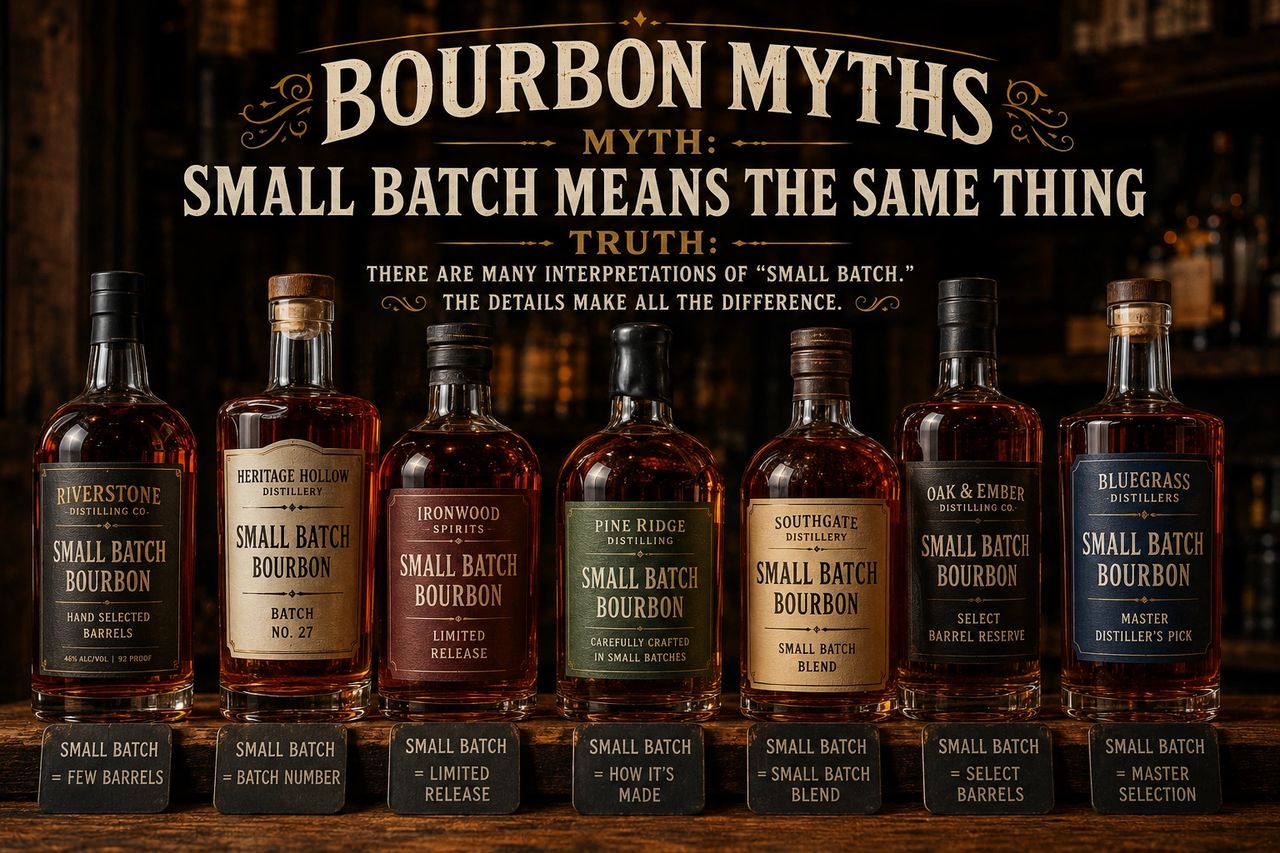
There is no legal definition for small batch bourbon.
Read that again.
No legal definition.
One distillery might consider ten barrels a small batch.
Another might consider a couple hundred barrels a small batch.
The term sounds exclusive, and sometimes it is.
But don’t assume that “small batch” automatically means rare, collectible, or hard to find.
Sometimes it simply means the marketing department liked the phrase.
## Myth #4: Single Barrel Is Always Better
I love single barrel bourbon.
Every barrel develops its own personality, which means every single barrel release tells a slightly different story.
That’s what makes them fun.
But better?
Not always.
When a master distiller creates a small batch bourbon, they’re blending barrels together to create balance and consistency.
That’s not easier.
It’s harder.
A great blend is every bit as impressive as a great single barrel.
The difference isn’t quality.
The difference is consistency versus individuality.
## Myth #5: Serious Bourbon Drinkers Only Drink It Neat
Can we retire this one already?
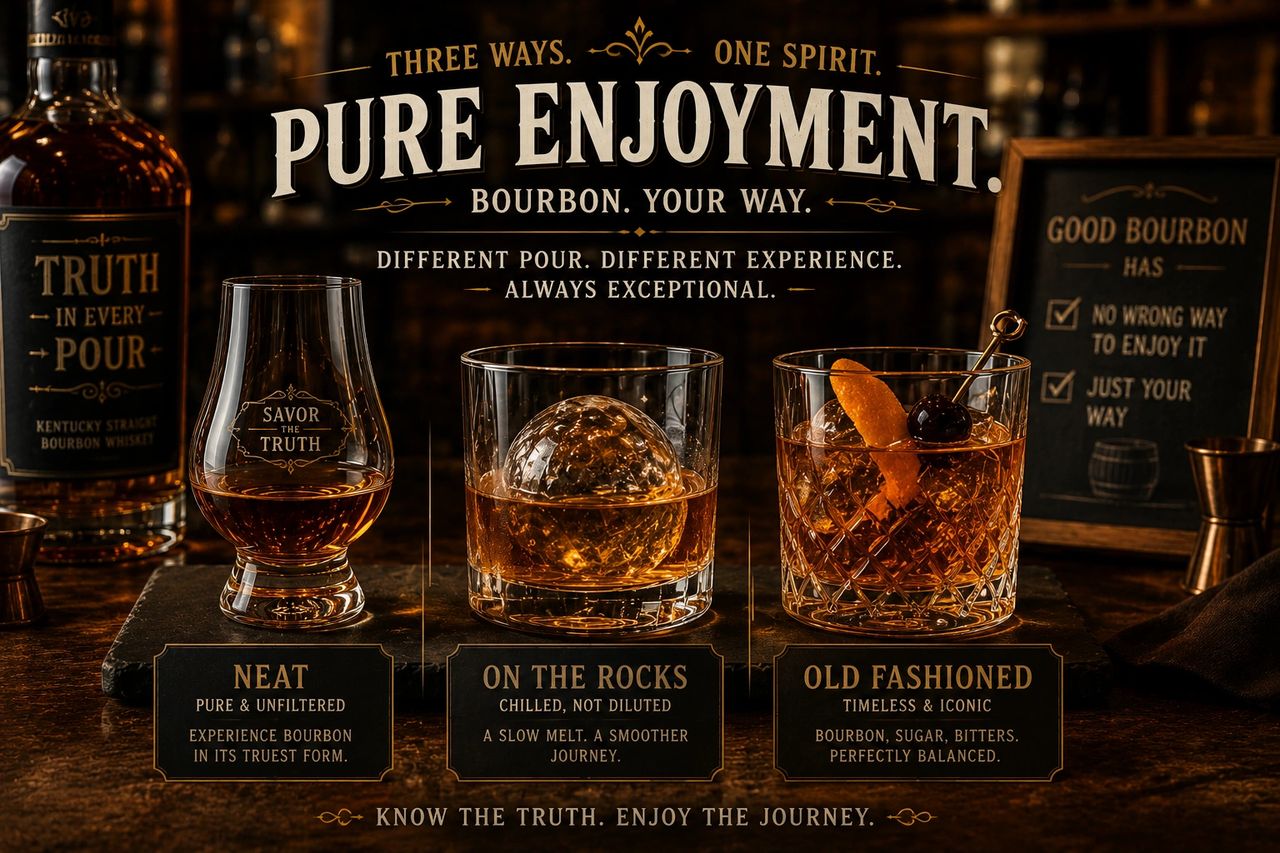
If you like bourbon neat, fantastic.
If you like a few drops of water, wonderful.
If you enjoy it with a large ice sphere, that’s perfectly fine too.
And if you love an Old Fashioned?
Welcome to the party.
I never understood why people spend money on a bottle and then let someone else tell them how they’re allowed to enjoy it.
The best way to drink bourbon is the way you like it.
End of discussion.
## Myth #6: Kentucky Limestone Water Is the Secret Ingredient
I love talking about limestone water because it’s a fascinating part of bourbon history.
Kentucky’s limestone naturally filters iron from the water and provides minerals that support the distillation process.
That’s real.
But sometimes people act like a barrel of Kentucky water magically turns into great bourbon.
It doesn’t.
Modern distilleries can treat and adjust water with incredible precision.
What really separates distilleries today often isn’t the water.
It’s the grain selection.
The yeast strain.
The barrel program.
The blending decisions.
The people making those decisions.
## Myth #7: Higher Proof Means Higher Quality
Some bourbon drinkers seem to believe that if it doesn’t set your chest on fire, it can’t possibly be good.
I call this the “proof chest-thumping” phase.
Most enthusiasts eventually grow out of it.
Barrel proof bourbons can be incredible.
But so can a beautifully balanced 90-proof bourbon.
Proof tells you how much alcohol is in the bottle.
It does not tell you how good the bourbon is.
I’ve had high-proof bourbons that felt one-dimensional and lower-proof bourbons that were elegant, layered, and unforgettable.
More proof doesn’t automatically mean more flavor.
## Myth #8: Bourbon Gets Its Color From Additives
This one is easy.
It doesn’t.
If a bottle is legally labeled bourbon, no coloring has been added.
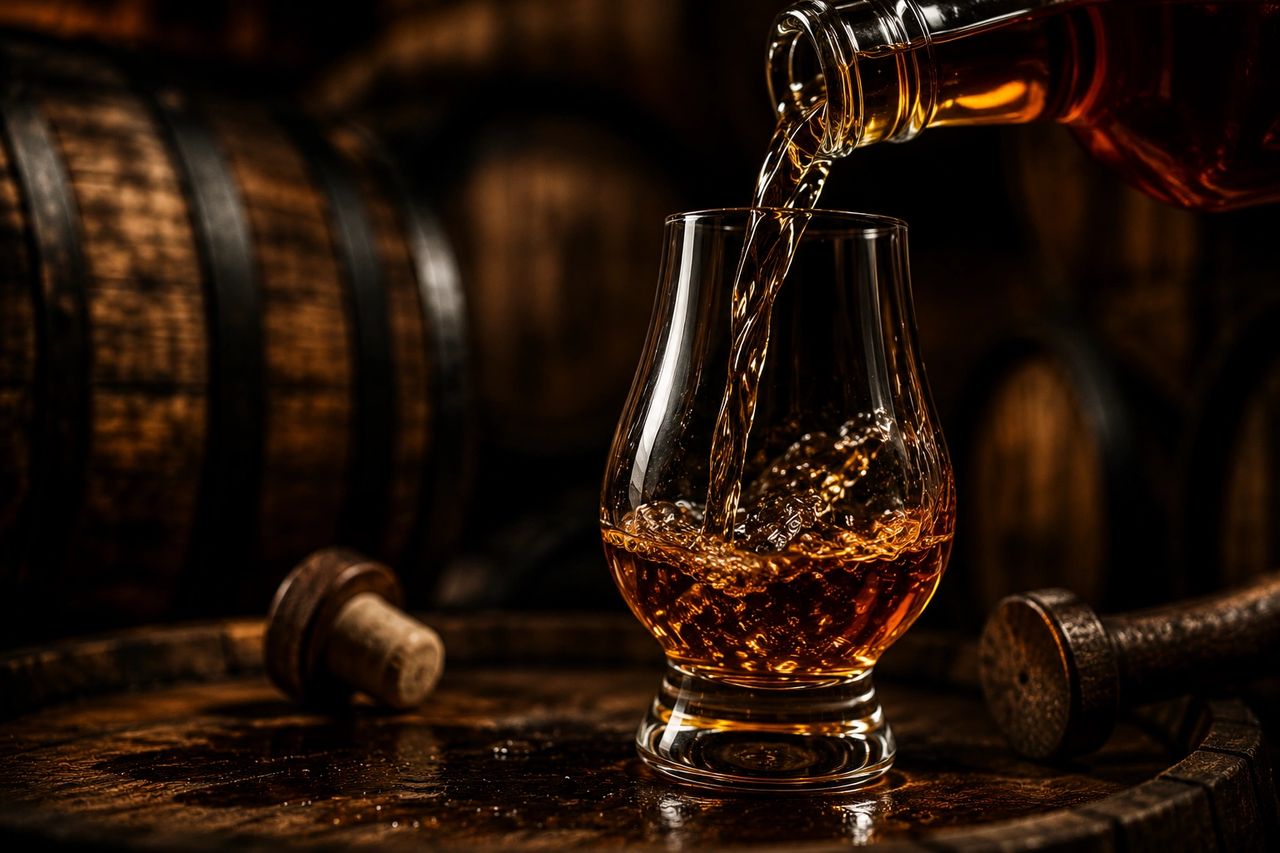
That rich amber color comes from years spent interacting with charred oak.
The barrel provides the color.
The barrel provides much of the flavor.
The barrel does a lot more work than most people realize.
## The Truth About Bourbon
The longer I work in this industry, the more I realize that bourbon isn’t about rules and myths.
It’s about curiosity.
Ask questions.
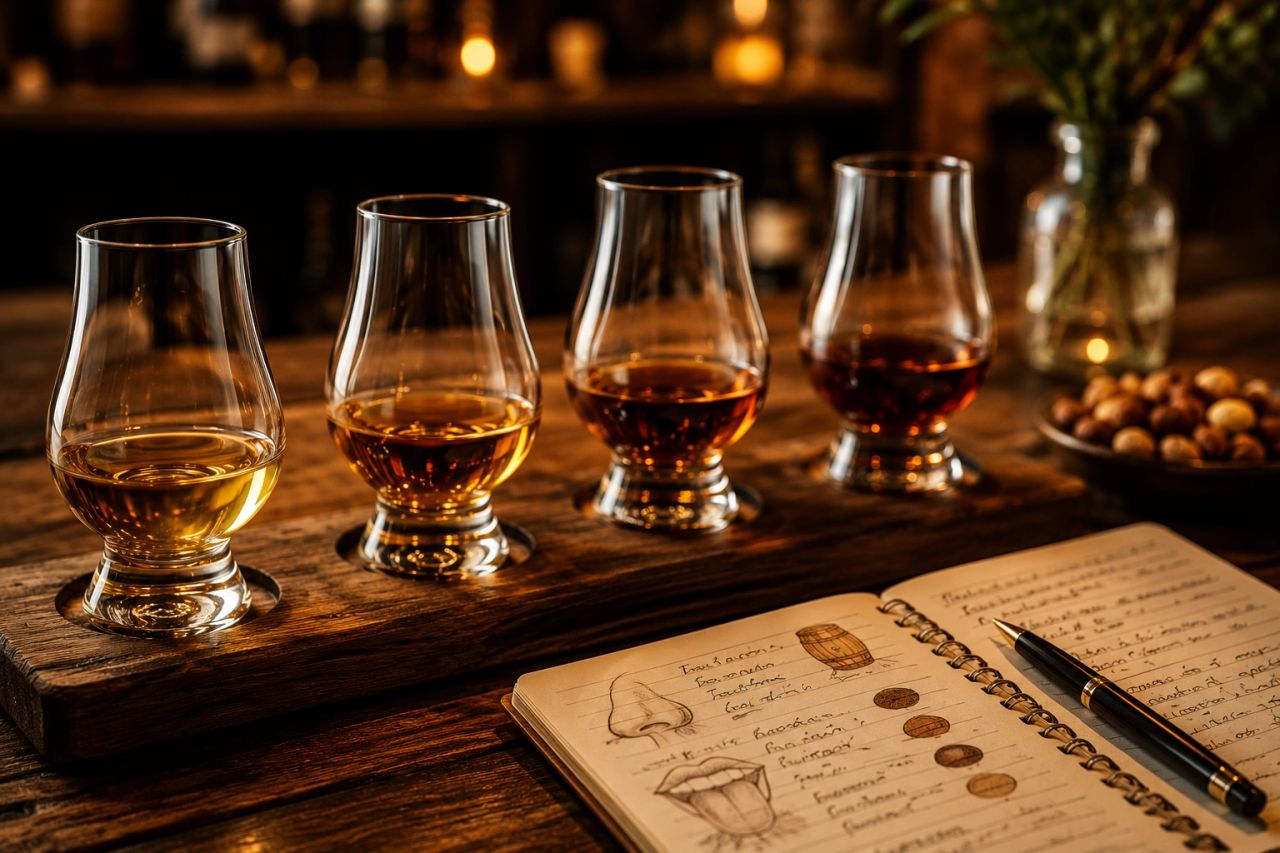
Taste different styles.
Compare a wheated bourbon to a high rye bourbon.
Try a barrel proof next to an 86-proof bottle.
Challenge your assumptions.
Because some of the best discoveries happen when you realize something you’ve always believed about bourbon isn’t actually true.
And trust me, there are plenty more myths where these came from.
We’ll tackle a few more in future classes.
Until then, pour yourself a glass and enjoy the journey.
That’s what bourbon was made for.
—
**Want to hear these myths debunked in person?**
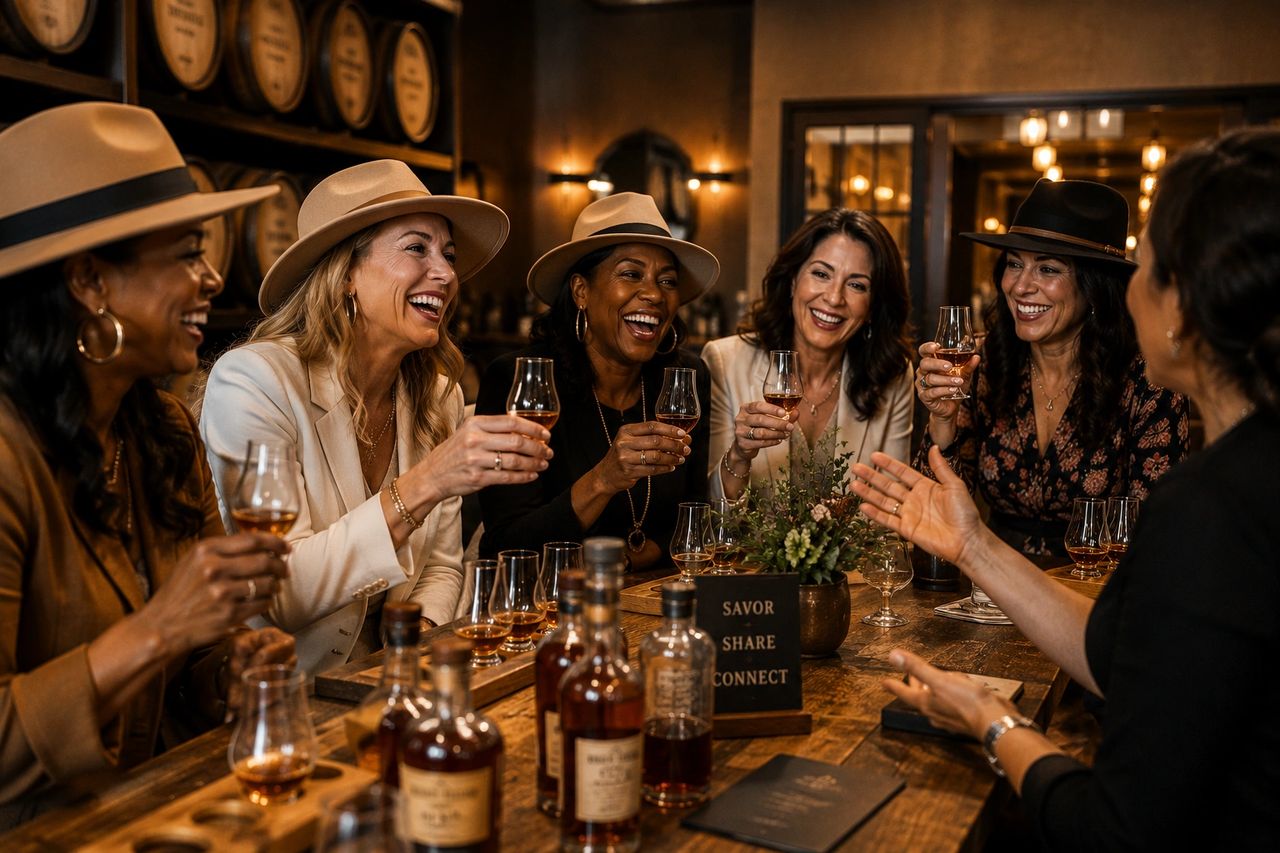
Come join me on a Sipping in the South tour. We’ll hit the distilleries, talk to the makers, and I’ll show you exactly where the truth meets the tradition.
[Book Your Tour](https://sippinginthesouth.com/)