
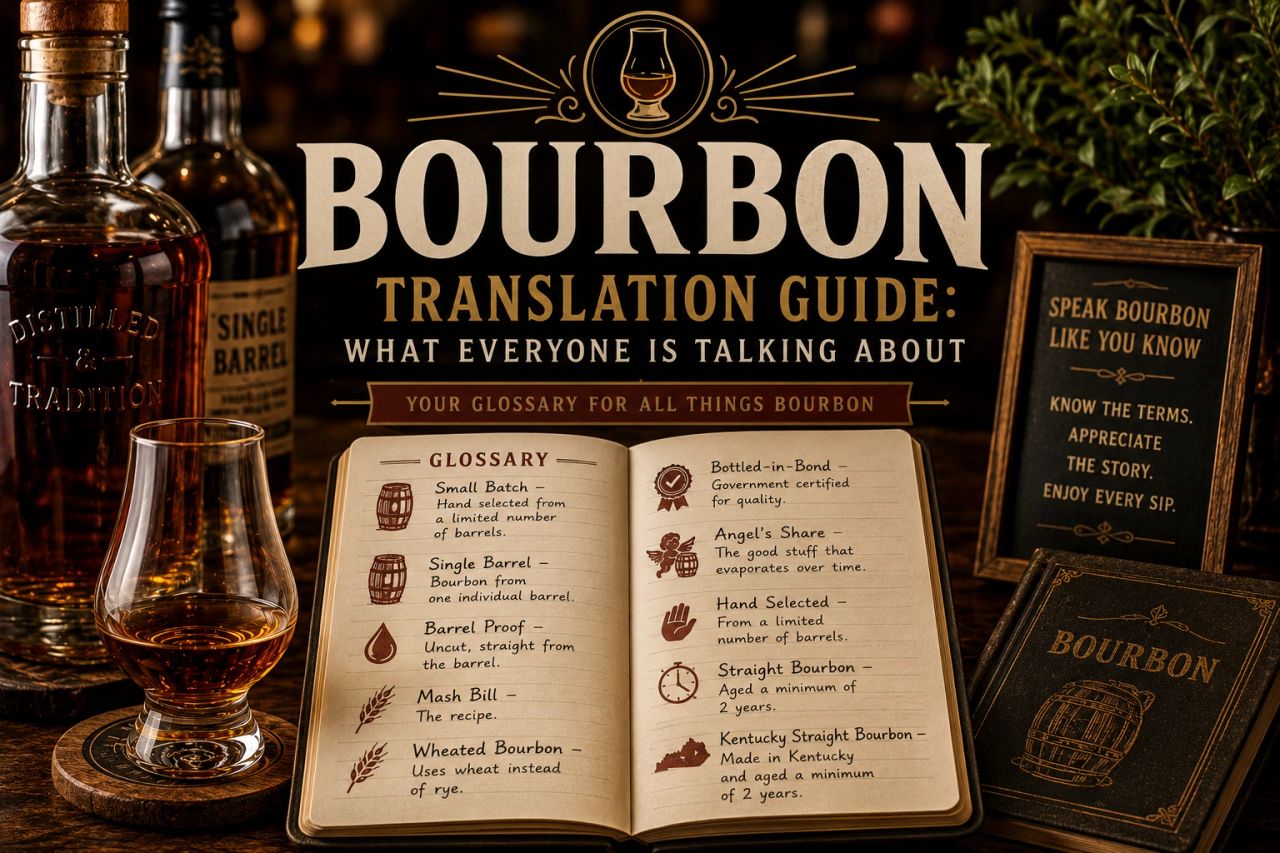
You’ve made it.
We’ve talked about how bourbon is made, what happens inside the barrel, how to taste it, the history behind it, and a few myths that probably need to disappear forever.
Now it’s time to learn the language.
Because sooner or later you’ll find yourself standing in a distillery gift shop, reading a bottle label, or listening to a guide say:
“This Kentucky Straight Bourbon was bottled in bond, entered the barrel at a lower proof, and spent eight years aging in the upper floors of the rickhouse.”
And you’ll either nod confidently…
Or smile politely while wondering what on earth they just said.
Don’t worry.
I’ve got you.
Think of this as your bourbon translator.
## The Recipe
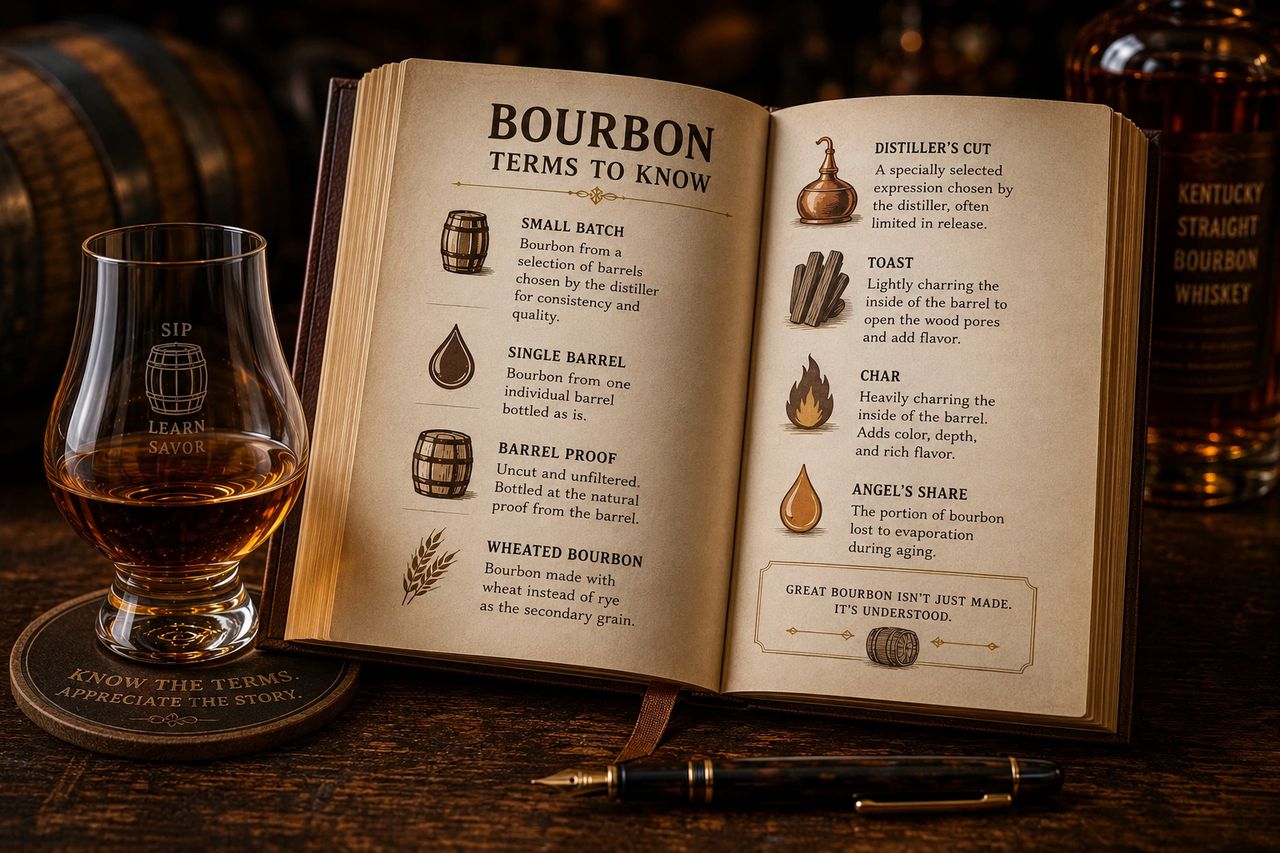
**Mash Bill**
This is simply the recipe.
Every bourbon starts with grain, but the combination of grains changes from distillery to distillery.
By law, bourbon must contain at least 51 percent corn. The remaining grains are typically rye, wheat, and malted barley.
Those additional grains may seem like a small part of the recipe, but they have a huge impact on flavor.
**High Rye**
A high rye bourbon generally contains more than 20 percent rye in the mash bill.
Rye is an assertive grain.
It brings notes of black pepper, cinnamon, baking spices, mint, and sometimes even a little herbal character.
The sweetness from the corn is still there.
The rye is simply competing for your attention.
**Wheated Bourbon**
One of the biggest misconceptions in bourbon is that wheat makes bourbon sweet.
It doesn’t.
The sweetness comes primarily from the corn.
Wheat is a softer grain that stays in the background and allows that natural corn sweetness to shine through.
That’s why wheated bourbons are often described as smoother, rounder, and more approachable.
**Malted Barley**
Usually the smallest grain in the recipe, but one of the most important.
Malted barley provides the enzymes that help convert starches into fermentable sugars.
Without it, making bourbon would be much more difficult.
**Sour Mash**
Despite the name, it doesn’t make bourbon taste sour.
A portion of the spent mash from a previous distillation is added to the next batch to help maintain consistency and create the ideal environment for fermentation.
Think of it as bourbon’s version of a sourdough starter.
**Distiller’s Beer**
Before distillation, the fermented mash looks a lot like beer.
Low proof.
Cloudy.
A little funky.
Not exactly something you’re ordering with dinner, but it’s the important step between grain and bourbon.
## Inside the Distillery
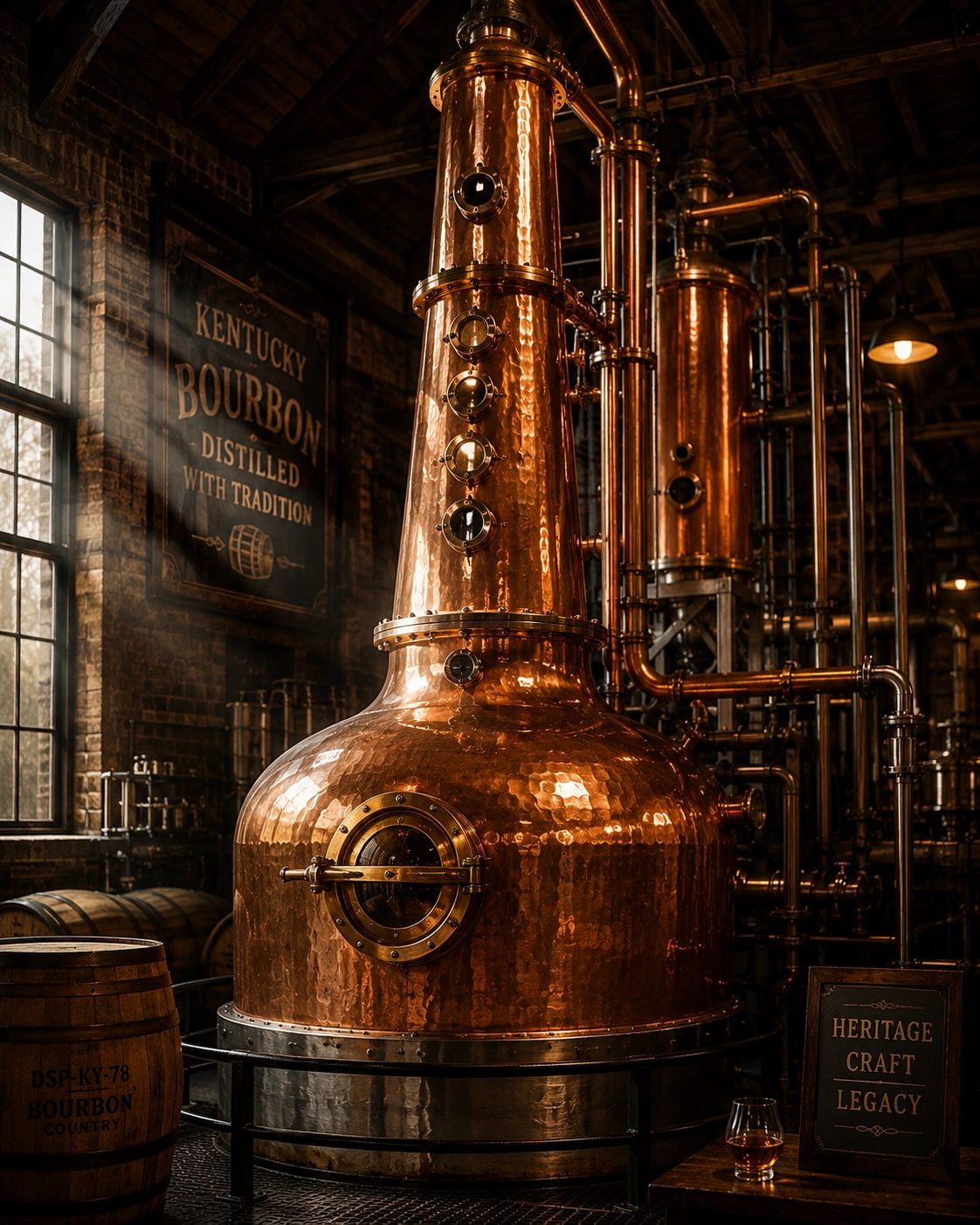
**White Dog**
Also called New Make Spirit.
This is bourbon before the barrel.
Clear.
Hot.
Grain forward.
Full of potential.
If you’ve ever wondered how important the barrel really is, taste White Dog once and you’ll understand immediately.
**Heads, Hearts, and Tails**
During distillation, not everything that comes off the still is worth keeping.
The heads contain compounds you don’t want.
The tails contain heavier compounds that can create off flavors.
The hearts are the sweet spot.
That’s what goes into the barrel.
**Proof**
Simply double the alcohol percentage.
50 percent alcohol equals 100 proof.
Easy.
**Entry Proof**
The proof at which the spirit enters the barrel.
This decision can have a major impact on how the bourbon develops during aging.
A close-up illustration of a bourbon
## The Barrel
**Cooperage**
A barrel-making facility.
If you’ve never visited one, put it on your bourbon bucket list.
The craftsmanship is incredible.
**Stave**
The individual pieces of wood that form the barrel.
No glue.
No screws.
Just remarkable engineering and pressure.
**Bung**
The wooden stopper that seals the barrel.
Usually made from poplar because it expands when wet and creates a tight seal.
**Toast**
Before the barrel is charred, it’s slowly heated over an open flame. This gentle toasting caramelizes the natural wood sugars and unlocks the foundational flavors — vanilla, caramel, baking spice.
Think of it like the difference between a slice of bread and a piece of toast.
Same ingredients. Completely different flavor.
The toasting builds the flavor.
The charring pulls it forward.
**Char Level**
How much the inside of the barrel is burned.
But first comes the toast.
The barrel is slowly heated to caramelize the wood sugars, unlocking vanilla, baking spice, and sweetness. That’s the foundation.
Then comes the char.
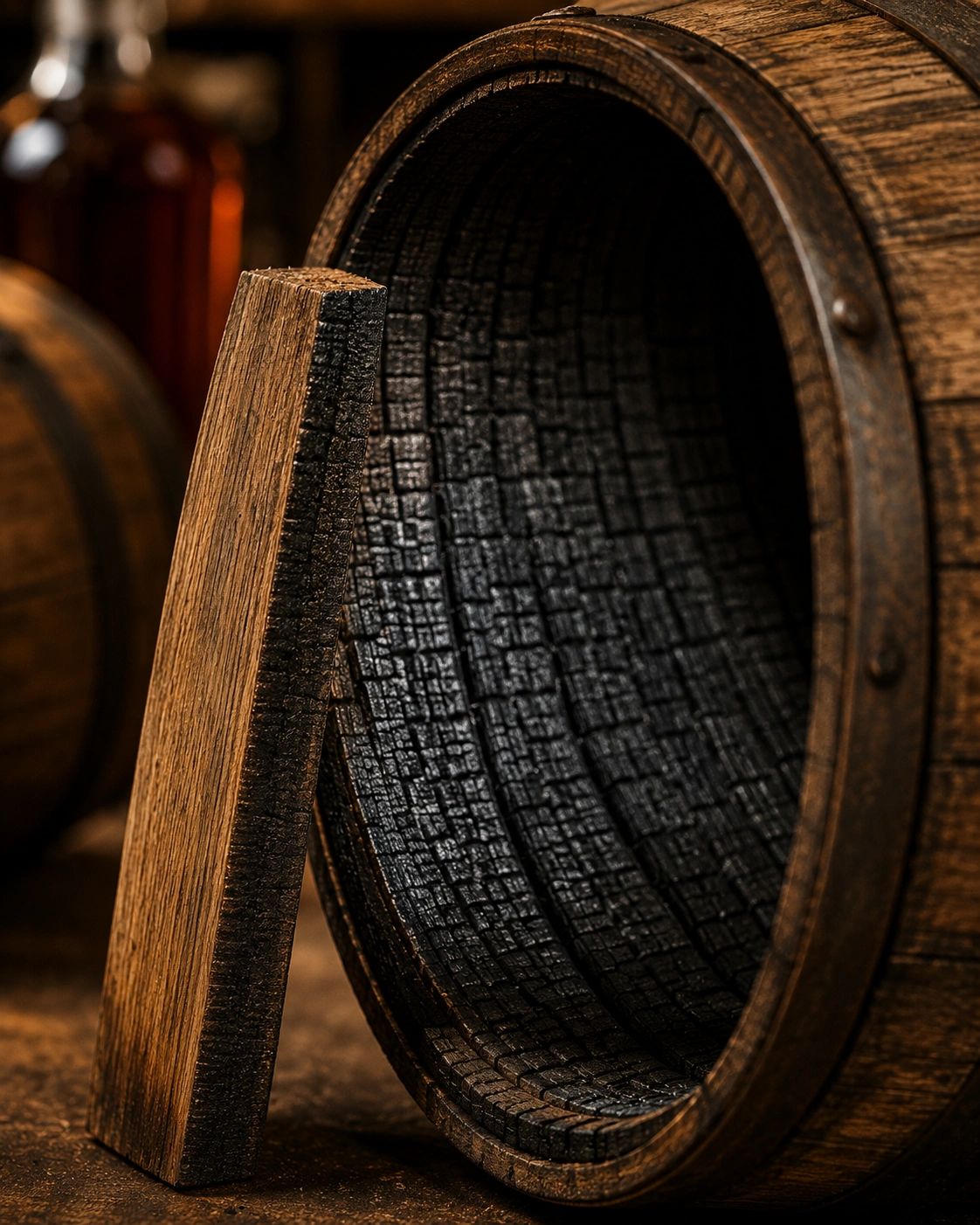
The fire creates a layer of charcoal that acts like a filter. But here’s the thing about char — it pulls those sugars, sweetness, and flavors forward toward the surface of the wood. The deeper the char, the closer those flavors are to the bourbon.
That means the distillate doesn’t have to spend as much time soaking deep into the wood to extract those flavors. The char brings the flavor to the party faster.
You’ll often hear people talk about Char Number 4, also known as the Alligator Char because of its rough, cracked appearance. The heavier the char, the faster the flavor extraction.
**Rickhouse**
The warehouse where bourbon ages.
A barrel on the top floor can experience dramatically different conditions than a barrel on the bottom floor.
Heat, humidity, and airflow all become part of the recipe.
**Angel’s Share**
The bourbon that evaporates through the barrel during aging.
Typically about 2 to 4 percent each year.
The distillery loses volume.
The angels get their share.
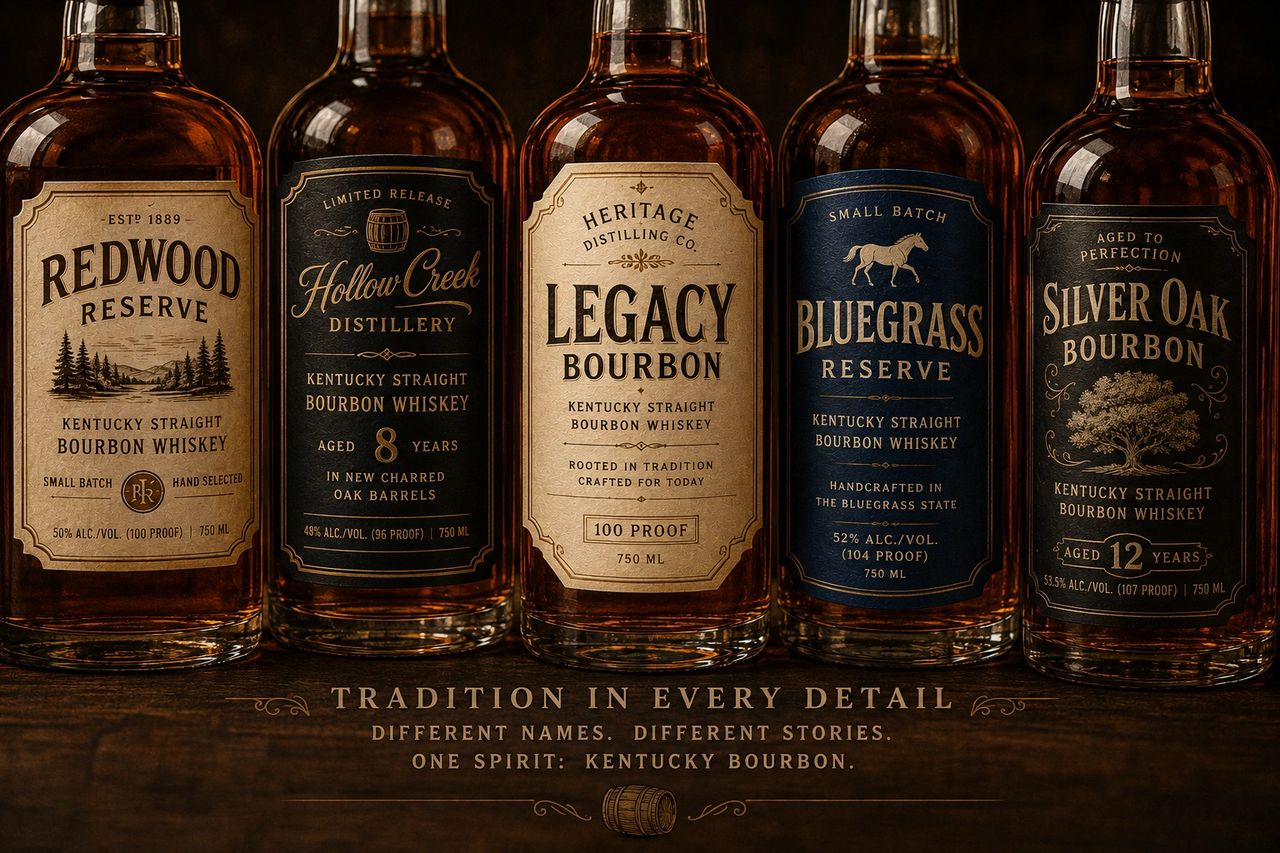
## What the Label Is Trying to Tell You
**Bourbon**
A whiskey that follows a specific set of legal requirements.
Made in the United States.
At least 51 percent corn.
Aged in new charred oak.
No additives.
Not all whiskey is bourbon.
But all bourbon is whiskey.
**Whiskey vs. Whisky**
In the United States and Ireland, you’ll typically see whiskey with an “e.”
In Scotland, Canada, and Japan, you’ll usually see whisky without the “e.”
Different traditions.
Same general spirit category.
**Straight Bourbon**
Straight Bourbon must be aged at least two years and contain no additives.
If it’s under four years old, the age must be listed on the label.
**Kentucky Straight Bourbon**
A Straight Bourbon that was distilled and aged in Kentucky.
This is one of the most common phrases you’ll see on premium bourbon labels.
**Bottled in Bond**
One distillery.
One distilling season.
Aged at least four years.
Bottled at exactly 100 proof.
This designation dates back to 1897 and was one of America’s first consumer protection laws.
**Full Proof**
One of the most misunderstood terms in bourbon.
Full Proof means the bourbon is bottled at the same proof at which it entered the barrel.
For example, if it entered at 125 proof and is bottled at 125 proof, it may be labeled Full Proof.
**Barrel Proof**
Also called Cask Strength.
No water is added after aging.
What comes out of the barrel goes into the bottle.
**Single Barrel**
Every drop in the bottle came from one barrel.
No blending.
Just one barrel telling its story.
**Small Batch**
Despite how official it sounds, there is no legal definition.
One distillery’s small batch might be ten barrels.
Another’s might be hundreds.
**Non-Chill Filtered**
Most bourbon is chilled before filtration.
Non-chill filtered bourbon skips that step, preserving compounds that some enthusiasts believe contribute additional texture and flavor.
**Age Statement**
The age on the label reflects the youngest bourbon in the bottle.
Not the oldest.
The youngest.
**Finished Bourbon**
A bourbon that spends additional time aging in a second barrel after its initial maturation.
Common finishing barrels include sherry, port, rum, cognac, and wine casks.
**Store Pick**
A single barrel selected by a retailer, restaurant, bourbon club, or organization for exclusive sale.
No two are exactly alike.
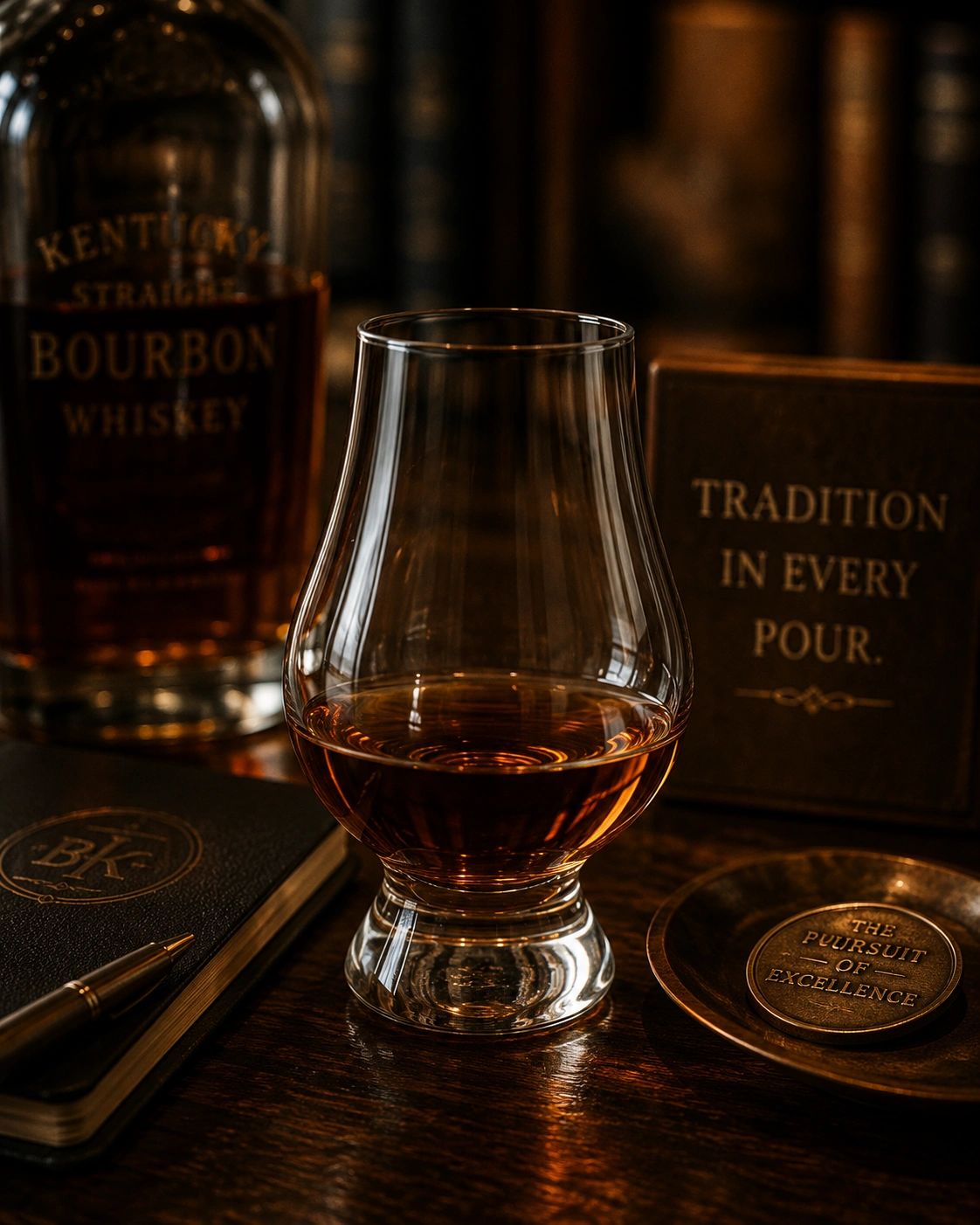
## In the Glass
**Dram**
A small pour.
Enough to enjoy.
Not enough to explain your life story to strangers.
**Neat**
No ice.
No water.
Just bourbon.
**Nose**
The aromas you smell before taking a sip.
A huge part of what we perceive as flavor actually starts here.
**Palate**
What you taste on your tongue and throughout your mouth.
**Finish**
What remains after you swallow.
Short.
Long.
Sweet.
Spicy.
Dry.
That’s the finish.
**Kentucky Chew**
A tasting technique where you move the bourbon around your mouth to coat every part of your palate.
**Kentucky Hug**
My favorite bourbon term of all.
It’s that gentle warmth that settles into your chest after a sip.
Not a burn.
A hug.
And once you’ve experienced it, you’ll know exactly what people mean.
## One Last Thing
After years of leading bourbon tours, I’ve learned that the people who enjoy bourbon the most aren’t the ones who memorize every term.
They’re the ones who stay curious.
Ask questions.
Try new things.
Compare a wheated bourbon to a high rye bourbon.
Taste a barrel proof next to a Bottled in Bond.
Pay attention to what you enjoy.
And don’t be afraid to admit you don’t know something.
That’s how all of us started.
Including me.
So the next time you’re standing in a rickhouse or staring at a bourbon shelf wondering what half those words mean, you’ll have a pretty good idea.
And if not?
Just ask.
Bourbon people love talking about bourbon.
Trust me.
—
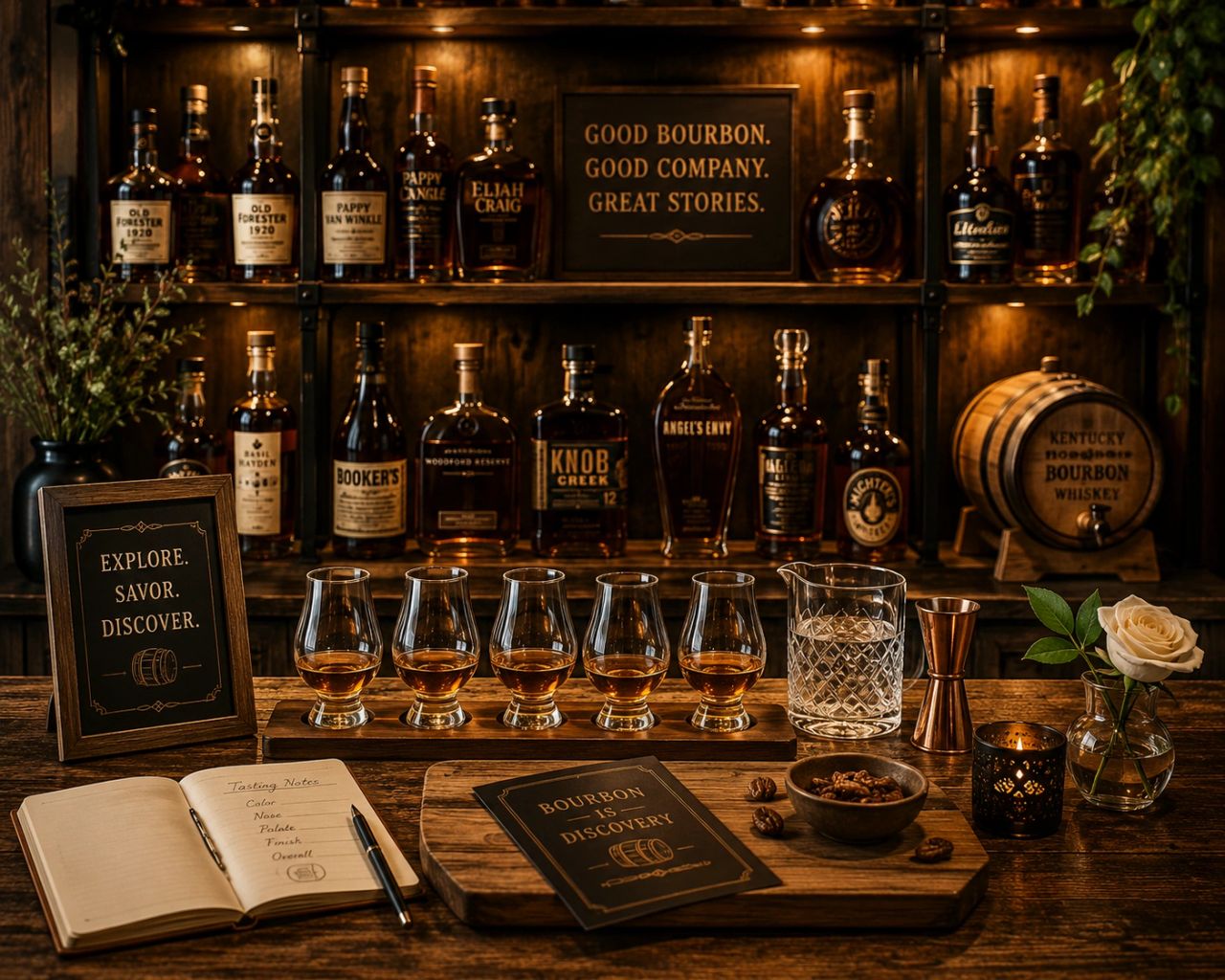
**Ready to put your new vocabulary to the test?**
Come join me on a Sipping in the South tour. We’ll hit the distilleries, talk to the makers, and put all these terms to use.


